
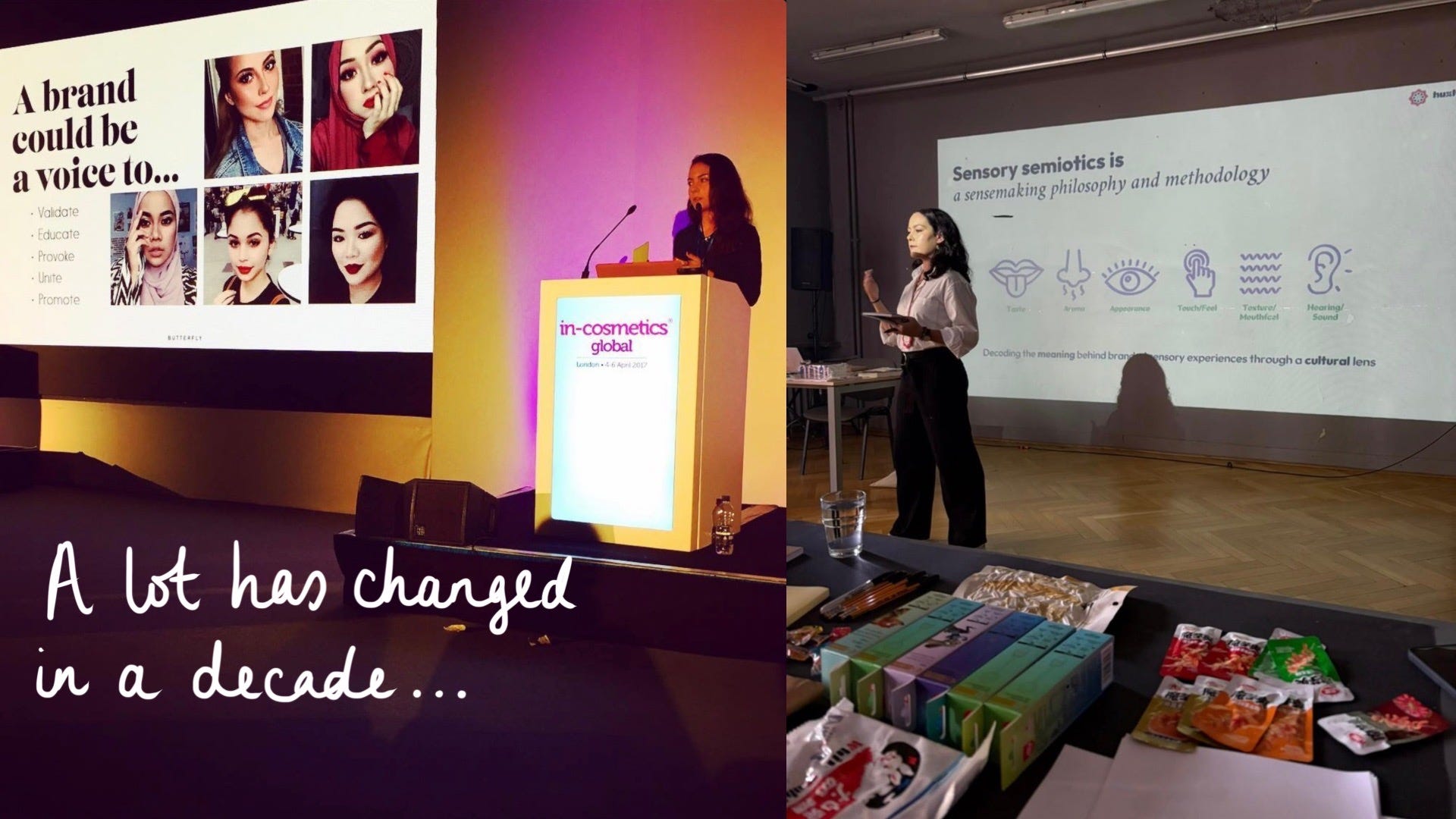
When I started working in brand strategy just over a decade ago, my progressive values were reflected in the direction culture was heading. My projects were about making luxury jewellery shopping less intimidating and skincare more inclusive. In 2017 I was awed (and terrified) by the opportunity to talk about halal beauty on stage and won a project off the back of it designing a brand that was for Muslim and vegan women alike.
Along the way Trump got elected and the Brexit vote happened. But this on the same timeline that Pepsi thought it was a good idea to bandwagon on social justice movements and BLM. And was criticised for getting political.
So it felt reasonable to conclude that politics happened “over there” and culture happened “over here”. And of course brands operated “over here”. They had to cross a tangible threshold to participate in politics, carrying the risk was being judged in hindsight to have done it credibly or authentically. The rule was, do liberalism properly or not at all (we did call out performative allyship but it was never existential).
We were all aware of our liberal bias working in branding and marketing as urban elites, but it was a given that brands should be on the “right” side of cultural change, and that cultural change happened in one direction. So I don’t remember any debates, for example, about whether brands should express any sentiment aligned to Trump or Brexit or anti-BLM. That was such a crazy idea then that it didn’t even cross our minds.
Everything feels different now.
The ground beneath our feet seems to have shifted but all we know is the pre-pandemic playbook of “do something related to equality, sustainability, inclusivity etc”. We were targeting climate-anxious social justice warrior Gen Z. That persona has quietly vanished, and the cultural climate we operate in is bewildering for everyone, even the ones who make sense of it for a living.
What’s different now is that the “over here” of culture and “over there” of politics is gone.
We can point to various factors to explain the collapse of this separation like the exacerbation of the culture wars via social media, cost of living crisis, war and the general destabilisation of everything we thought we knew. But it’s been a helpful reminder that all the assumptions we made in the 20-teens about how culture works and how brands operate in it had a strong liberal bias or optimism.
The broken assumptions from the 2010s no longer hold.
The most fundamental assumption is that cultural shifts reflect the normalisation of increasingly progressive values. When we look at the macro level, this holds true in a lot of cases of course. But this journey towards what everyone across the political spectrum would agree on (something along the lines of being able to afford the basics and ensuring that the next generation have it better) has stalled for everyone.
Today, simultaneous and opposing forces are equally capturing the zeitgeist.
Just looking at beauty ideals, for example, and the replacement of the body positivity movement with the return of diet culture, and the resulting counter-movements to age gracefully. A semiotic decode of this landscape would struggle to say in the context of looksmaxxing and tweakments that there’s a guaranteed future that’s inclusive and forgiving of gravity.
Gramsci would point to these kinds of dynamics as a restibilisation of cultural hegemony back towards elites. The brief cultural consensus we had around progressive values is being actively contested by conservative movements, and ultimately those with real power and influence. In the case of the beauty industry, it feels naive to have hoped that the millennia old norm of an exclusive privileged ideal would become a thing of the past.
Another broken assumption of the 20-teens is that brand credibility and authenticity insists on them walking the walk. The social justice aesthetic normalised by brands like Oatly and Tony’s meant that if you used a jaunty typography and vibrant colours you were probably doing a lot of good for the world. Equally if you used Gen Z internet aesthetics you probably cared about your consumers’ mental health.
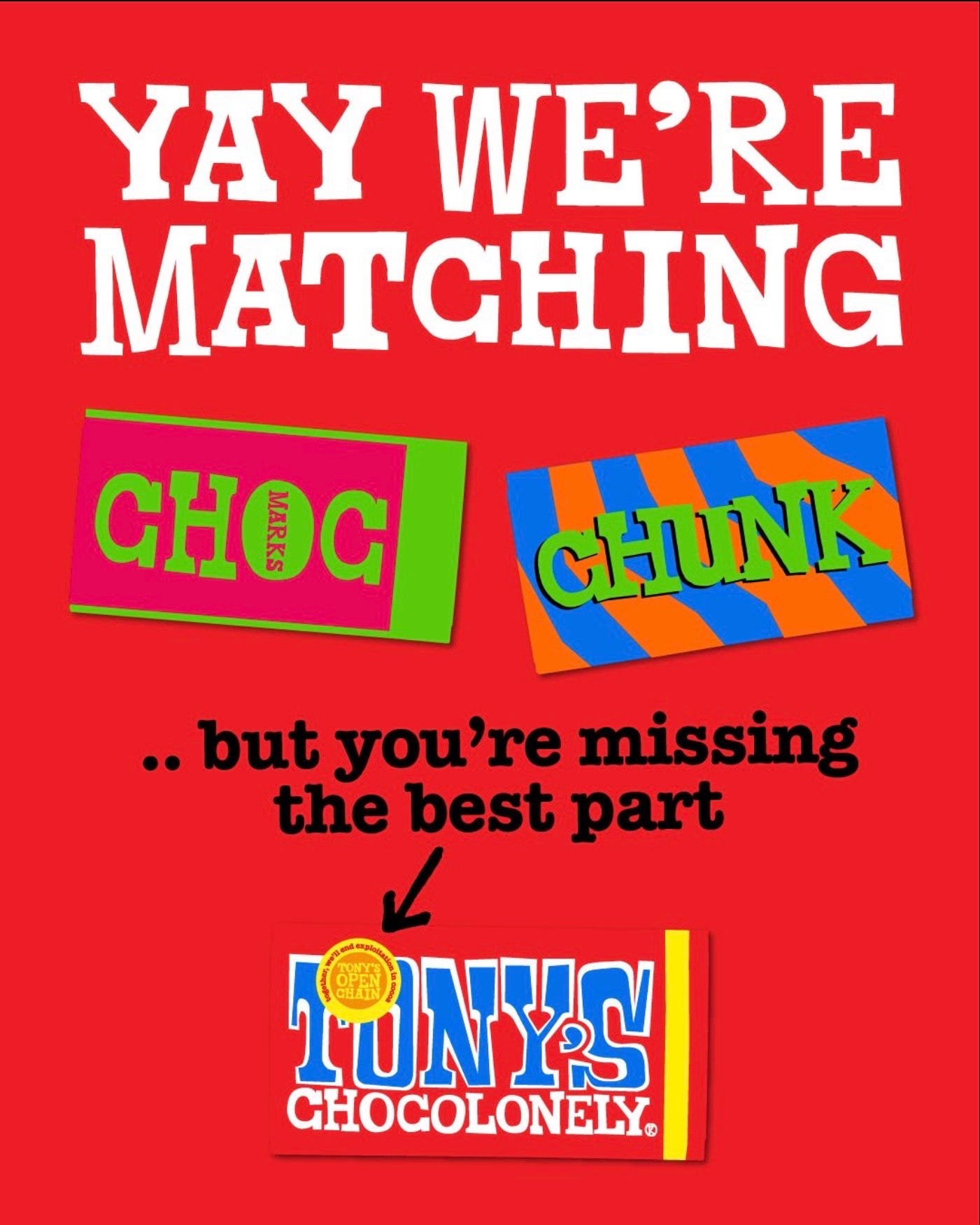
But when M&S recently went for anti-slavery vibes, it’s a signal of Mark Fisher’s Capitalist Realism argument. He describes the way that capitalism absorbs anti-capitalist or progressive messaging. It removes its political power, and then sells it back to consumers as an aesthetic. The way that I see this is that when progressive threatens to become mainstream, it hits up against the structural barriers and limits of big industry. We start to see the visual signifiers of progress get separated from the values and manufacturing reality that give aesthetics meaning. In other words, big brands are getting away with wearing the clothes of progress without doing anything meaningful. The accountability we thought was coming from regulators and wider industries never did.
The blind spots and blind eyes turned
The fact that we look at all this now and feel a bit naive reveals a lot of bias (or you might call it misplaced optimism) inherent in cultural strategy that we need to keep in mind.
The first is the blind spot for the right wing part of culture. I definitely felt this during the Sydney Sweeney x American Eagle Outfitters controversy last year and wished there were more cultural commentators who could give a more nuanced read. The direct result of this blind spot is the aforementioned assumption that progressive values are the correct trajectory.
Another weakness or blind spot I’m aware of at the moment is shying away from conversations with brands about whether their ambition is to be at the forefront of culture OR push inclusion/fairness/ethics etc. Realistically they’re aiming for the former, but our tools are designed for the latter, so then we have to have awkward conversations with clients where we have to define what we mean by “culturally emergent”. This confronts the intentional conflation of these objectives and the commercial imperative to be cool, not good, brings us back down to earth. The resulting recommendation straddles the dominant/emergent boundary where they can use the same big industry business model while communicating in a way that’s meaningful to Gen Z.
The same dynamic that leads to this situation also means that the takeaways and strategy that brands move forward with are materially safe, but aesthetically á la mode. We don’t call it out strongly enough for them to stay true to the admirable aims they had at the start of the project before the flattening/averaging/de-risking/common denominator effect of compounding corporate stage gates.
Finally, we accuse the right of romanticising the past while the left is guilty of romanticising the future. When the signals of the future all feel quite dire, there’s more we could do to a) do the imaginative work to make better futures feel real and achievable, and b) also look back at history to learn and carry forward what’s worked.
The symptoms
The current consumer era, while in many ways re-embracing conservative norms, is still getting savvier, more cynical and less trusting. Doing the right thing as a brand means everything and nothing.
So we're left with a parallel parking style precision positioning exercise. A shimmy to the left to capture young women. A shimmy to the right to keep shareholders happy. A step forward to grow. A step back to exercise the historic assets. The result likely brings us back to Baudrillard's theory of Hyperreality where symbols (emergent Gen Z aesthetics, progressive signaling) no longer refer to any underlying reality—they exist purely as self-referential tactics.
With the cultural tug of war we're seeing, it might make sense not to bet on a future outcome, but to pick a tension that may feel messy and irreconcilable. Surfacing it and making it visible might go a long way in making people feel seen without having to fix all their problems (see yfood’s This Is Food example below). GLP-1s would feel like good example of this where we don't know where the moral debate will land. Hedging bets and staying silent in the meantime while figuring out a solid stance trades off the risk of waiting with the risk of certainty but based on the assumption that people need a specific solution.

So what do we do now as cultural strategists?
The way that brands currently seek cultural alignment is through understanding shifts and trajectories to position themselves in a way that they can ride the wave. But it feels to me like we’ve reached the limits of predictive and frictionless strategy. In a landscape that’s so polarised, the role of strategy shouldn’t be to predict moral progress, but to analyse the dynamics of power, risk and trade-offs. As Jasmine Bina has pointed out, trust is earned today through demonstrating that you have skin in the game.
If a brand isn’t willing to risk market share for value, cultural strategy is just a back drop. If analysis and recommendations feel flat and safe, it might be because they sit within a neat matrix and don’t require any risk, or even digging beneath the surface to begin restructuring how we even think about understanding and addressing messy cultural and human tensions. So the risk isn’t shifting into an edgy part of culture, it’s being willing to step on the true platform of culture that’s constantly shifting under our feet. This is where the real value is that moves things forward intentionally (not predictively).
Because participating in culture today is no longer as simple as picking where is cool (which fashion or music subculture is most relevant to us?), has runway (what are the subcultures of the future?) and will turn out to be the right side of history (the remnants of the moral progress myth) but realising that it’s so fragmented and embedded in political and economic structures that it has to mean selecting a cultural myth that obscures a broken part of the system and remaking it.
And to end on a positive, did the brand activism era end because of the far-right resurgence, or did we all agree that it was a performative ideology at its heart? And that when a “brands for good” consensus returns, it will reach deeper, imagine better and insist harder.
That’s what I hope to see in my next decade as a cultural strategist (maybe that halal vegan brand will finally launch!)
i find the tension between being culturally relevant and actually standing for something really interesting here. especially because, from a brand strategy perspective, both can look almost identical on the surface: the right language, the right aesthetics, the right cultural references. but one is about signalling alignment, while the other requires making decisions that might actually cost the business something
i'm curious how u think strategists can distinguish between a brand genuinely engaging with a cultural tension and simply finding the most commercially viable way to represent it?
No debates, because the idea never crossed anyone’s mind: that’s the hardest assumption to rebuild, since at the time it felt like a fact. Body positivity is the version I’ve watched most closely: brands picked it as the right side of history, and a few years later the same feeds are full of GLP-1 ads. Do you think brands should still be forecasting a direction at all, or just reading the tension?